
 By
By 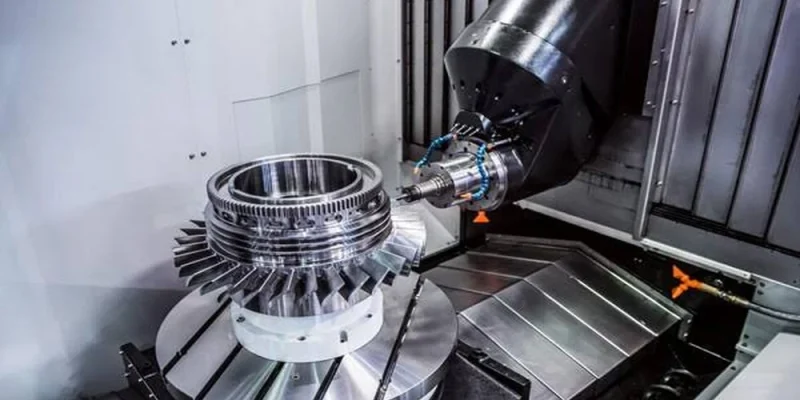
The automotive industry’s tolerance of manufacturing variation has shrunk consistently over the past three decades. Where a component specification in 1990 might have accepted a tolerance band of plus or minus 0.2 millimetres on a critical dimension, the equivalent specification today may demand plus or minus 0.05 millimetres, driven by the tighter fits required for fuel efficiency improvements, noise reduction, and the integration of sensors and electronics into every functional system of the modern vehicle.
An automotive part manufacturer who serves this modern precision requirement must have the manufacturing process capability to work within these tighter tolerances consistently, the quality management system to document and verify compliance, and the supplier qualification credentials that automotive OEMs and Tier 1 suppliers require from their manufacturing base.
AMT provides precision automotive component manufacturing using metal injection moulding, a process that is increasingly adopted in the automotive sector for the high-volume production of small complex metal components where the combination of geometric complexity, functional alloy properties, and tight tolerances makes MIM the most economical production route.
MIM in Automotive Applications
Metal injection moulding’s adoption in the automotive sector has been driven by the same factors that drive its adoption in other precision manufacturing domains, the geometric freedom to produce complex shapes that machining would produce expensively, the ability to work in alloys that casting cannot match for density and mechanical properties, and the production economics at the volumes where automotive component production occurs.
Common automotive applications for MIM include fuel injection system components, where the combination of complex internal geometries, tight tolerances, and hardness requirements make MIM the preferred process over machining, lock mechanism components, which require complex interlocking geometries in hard-wearing alloys; sensor housings and brackets, where complex geometry in high-strength alloys at high volume are all simultaneously required; and turbocharger components, where the high-temperature alloys required for exhaust-side operation benefit from MIM’s ability to process these materials without the cost penalty of machining hard alloys.
Automotive part manufacturer AMT applies MIM technology to these application categories, with alloy selection, tooling design, and process parameters appropriate for the specific automotive component requirements.
IATF 16949 and Automotive Quality Requirements
The automotive supply chain operates under IATF 16949, the quality management standard specifically designed for automotive applications. This standard includes requirements beyond ISO 9001 or ISO 13485 that are specific to the automotive manufacturing environment, including advanced product quality planning, failure mode and effects analysis, statistical process control, and measurement system analysis.
AMT’s quality management practices are aligned with these automotive quality requirements, enabling the company to serve Tier 1 and Tier 2 suppliers who require their manufacturing partners to meet the automotive sector’s quality discipline.
High Volume Production for Automotive
Automotive component production volumes are typically higher than medical device production volumes. A single model year production requirement for a fuel injection component may be measured in hundreds of thousands to millions of units. MIM’s multi-cavity tooling capability and the cycle time efficiency of the injection moulding process are essential to meeting these volumes at competitive unit costs.
AMT’s production planning and capacity management for high-volume automotive programmes accommodates the volume requirements and the just-in-time delivery expectations that automotive supply chains commonly impose, with production schedules aligned to the customer’s demand signal and inventory policies.
Material Requirements for Automotive MIM Components
Automotive MIM components typically require alloys with specific mechanical property targets driven by the functional requirements of the application. Fuel injection components require alloys with corrosion resistance to fuel and high hardness for wear resistance. Lock mechanism components require toughness and hardness combinations. Structural components may require specific yield strength targets.
AMT’s alloy capability for automotive MIM includes stainless steels, low-alloy steels, and tool steels that cover the principal material requirements of automotive MIM applications, with heat treatment available as a post-sintering operation where elevated hardness or strength is required.
For automotive OEMs and Tier 1 suppliers seeking an automotive part manufacturer with MIM technology, precision capability, automotive-aligned quality management, and the production volume capacity to serve high-volume automotive programmes, AMT provides the precision automotive component manufacturing service that modern automotive manufacturing demands.










Comments